
Nature Photos 2026 January
Photos taken in and around Batheaston
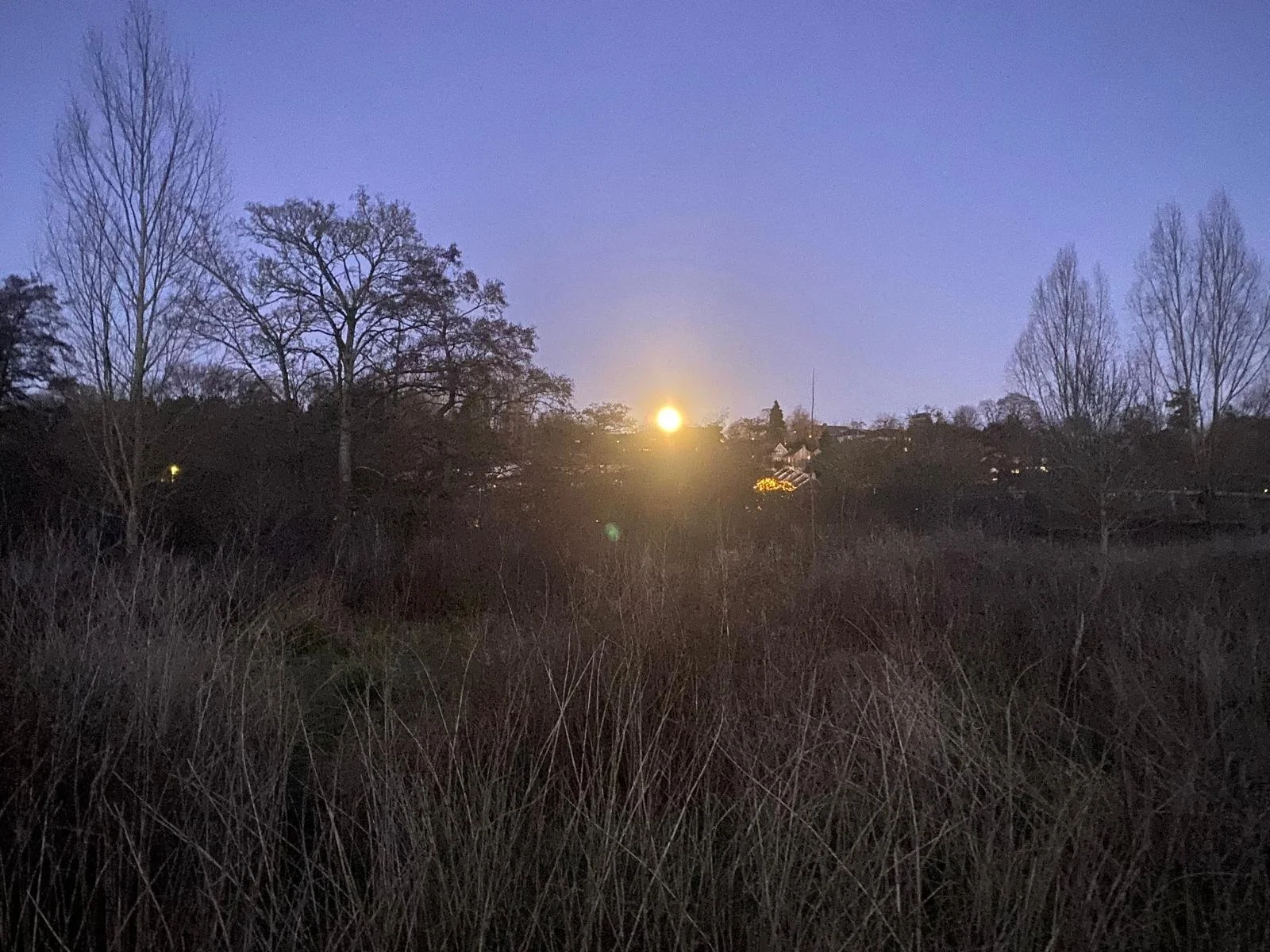
Wolf Moon rising
January's full Moon is often known as the Wolf Moon in the Northern Hemisphere because it marks the time of year when it was believed that wolves howled more, as there was less food around.
(Photo by Steve Harper)
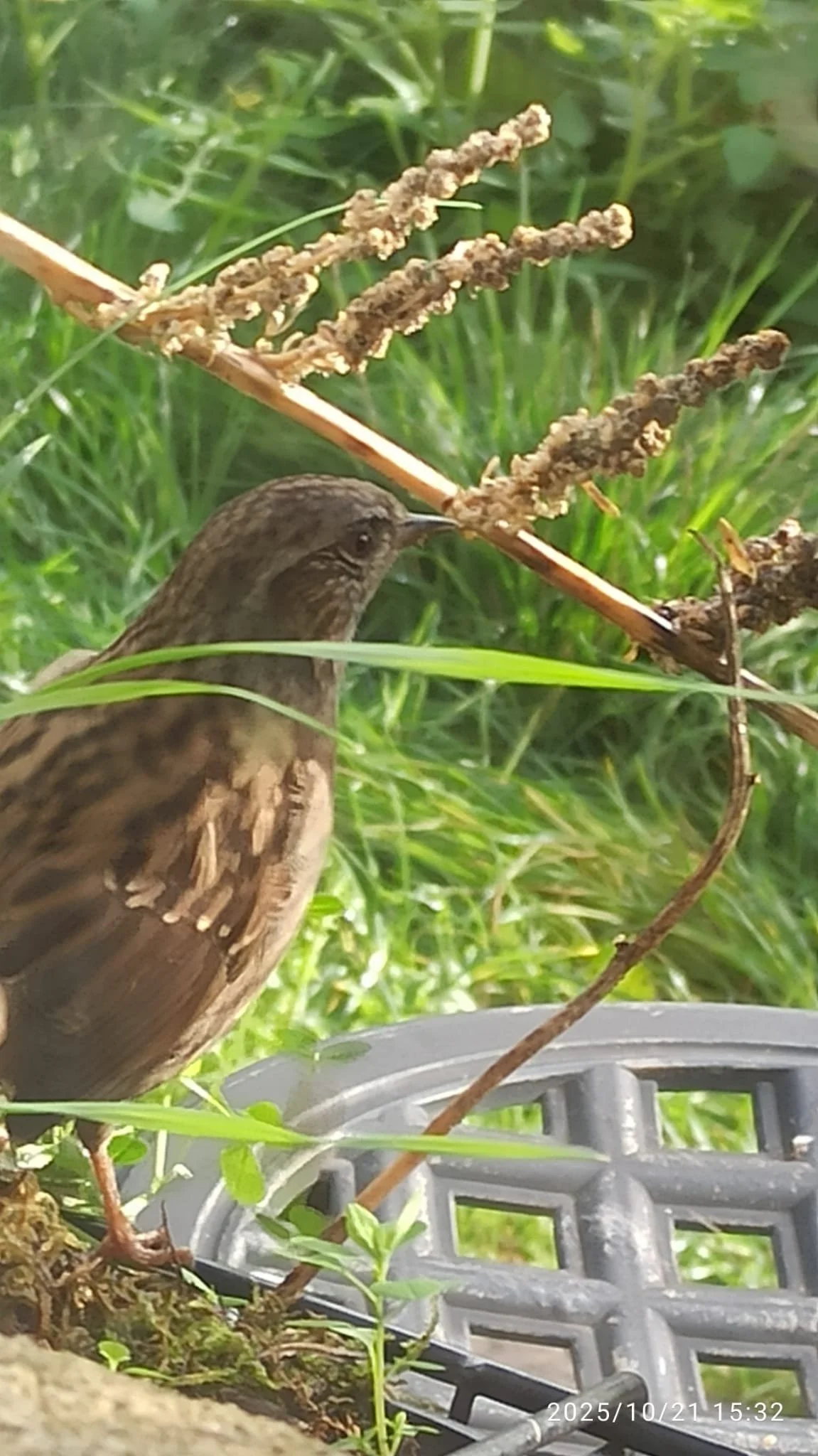
Song Thrush
This Song Thrush is eating Lambs Quarter, an annual weed closely related to quinoa. They also eat earthworms, snails, and berries. They break the snail shells by smashing them against a stone with a flick of the head.
Their numbers have declined significantly in the UK. We can help them by leaving some wild, untidy patches in our gardens. Listen to their distinctive song here.
(Song Thrush by naturenotesuk -- https://freesound.org/s/416607/ -- License: Creative Commons 0)
(Photo by Jenny Lambertz)
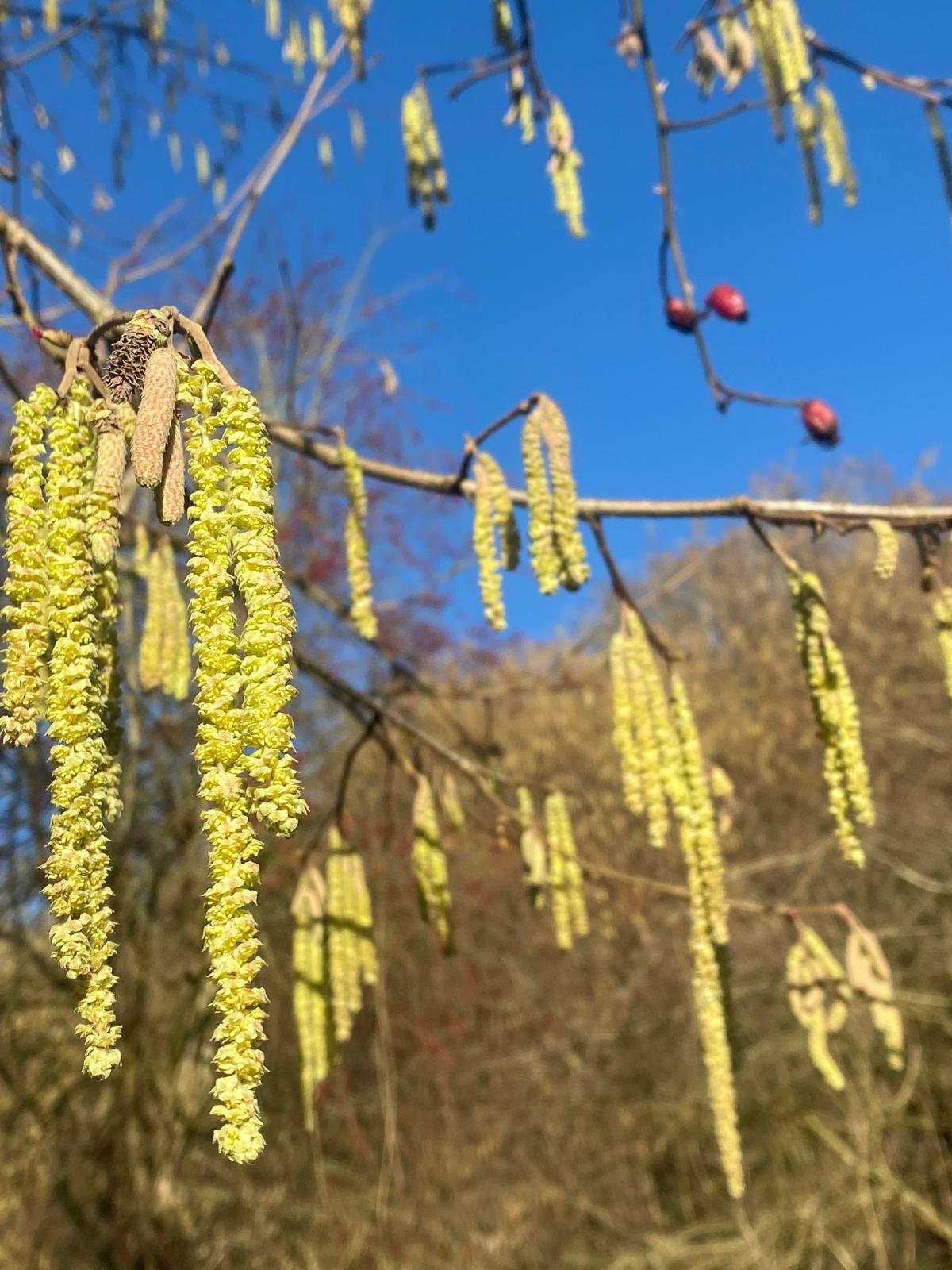
Hazel catkins
Hazels have male and female flowers on the same tree. These dangling catkins are the male flowers. The wind carries their pollen to pollinate female flowers on compatible trees nearby. Read more about catkins here.
(Photo by Steve Harper)
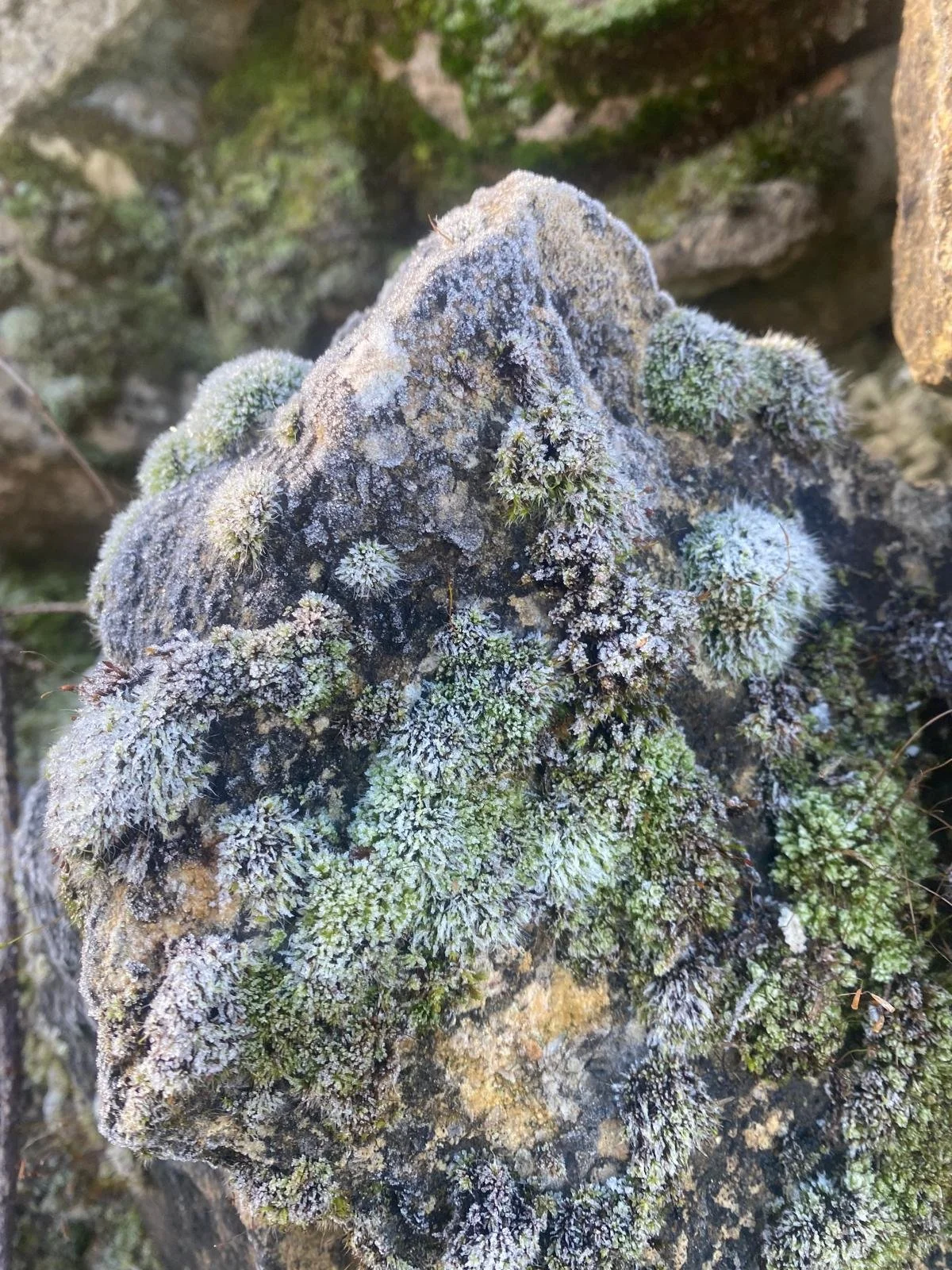
Frost on moss covering a stone
There are at least 12,000 species of moss. They first evolved over 250 million years ago. They break down rocks to release minerals such as calcium and phosphorus - which then become available for themselves and more complex plants to use. They do this by secreting organic acids such as citric and oxalic acid. They also absorb water and hold it in the cracks and crevices of rock. If this water freezes, it expands and the pressure gradually weathers the rock.
They are among the first plant colonisers of areas, e.g. after forest fires, where their ability to stabilise the soil surface and retain moisture helps other plants to grow.
They take up billions of tons of carbon each year worldwide.
(Photo by Steve Harper)